
Air quality education and outreach
Navigate to: Air quality in Colorado | Key pollutants and challenges | Air Quality Index (AQI) | Learning Library program | Learning Library book list | Hands-on activities | Handheld air sensor activities | Anti-idling activities | Air quality flag program activities | Educational resources for students | Air monitoring | Public participation opportunities | Contact us
Air quality in Colorado
The Air Pollution Control Division provides air quality education and outreach resources to empower individuals, communities, and students across Colorado to take action to protect their health and the environment.
Colorado faces unique air quality challenges due to its geography, climate, sources, and growing population. Air pollutants can affect your health, but the risk depends on what you're exposed to, how much, and for how long. Not everyone is affected the same way. Age, health, and other personal factors also play a role.
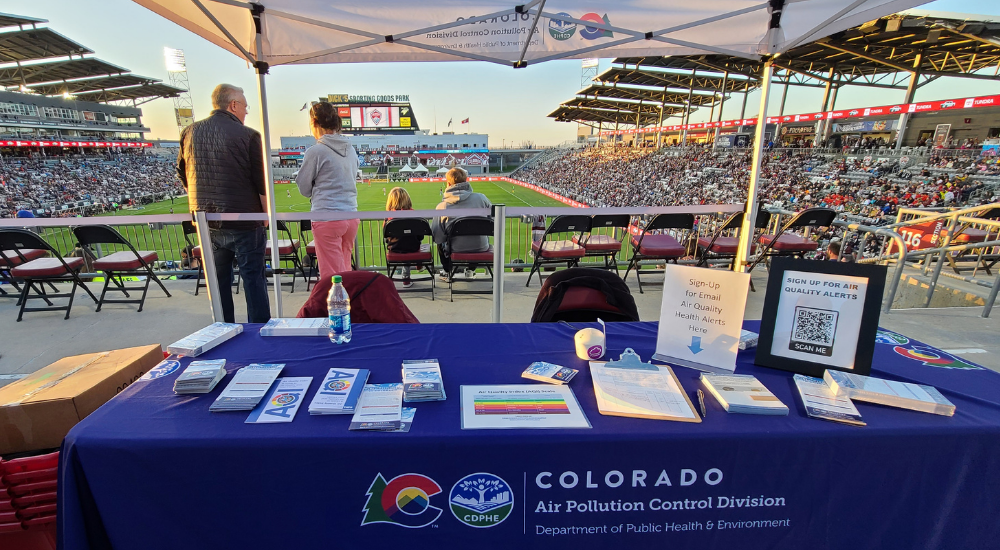
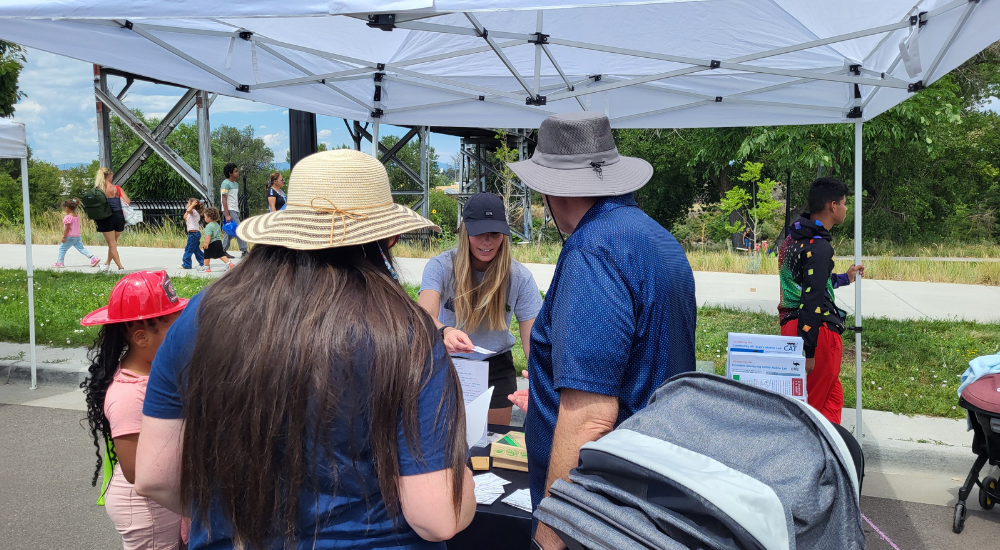
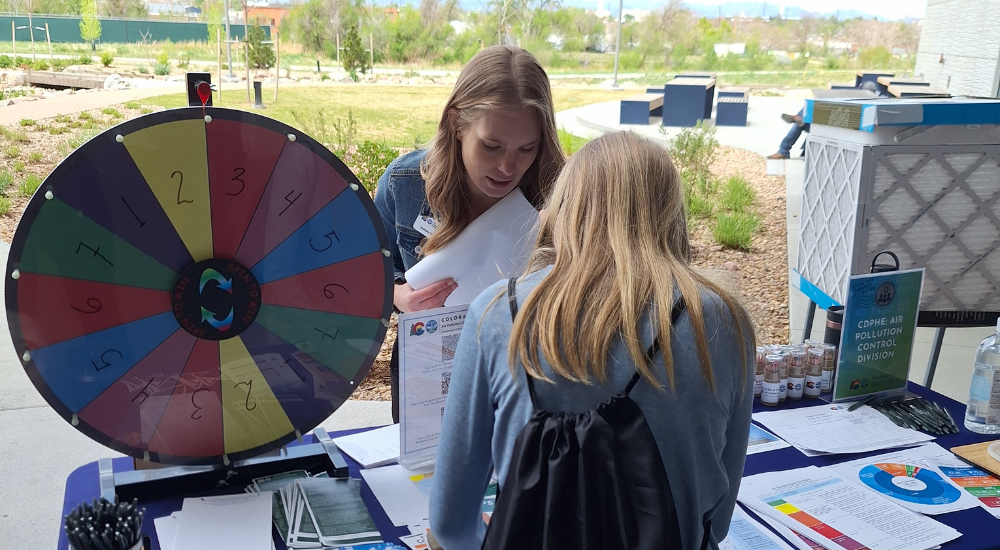
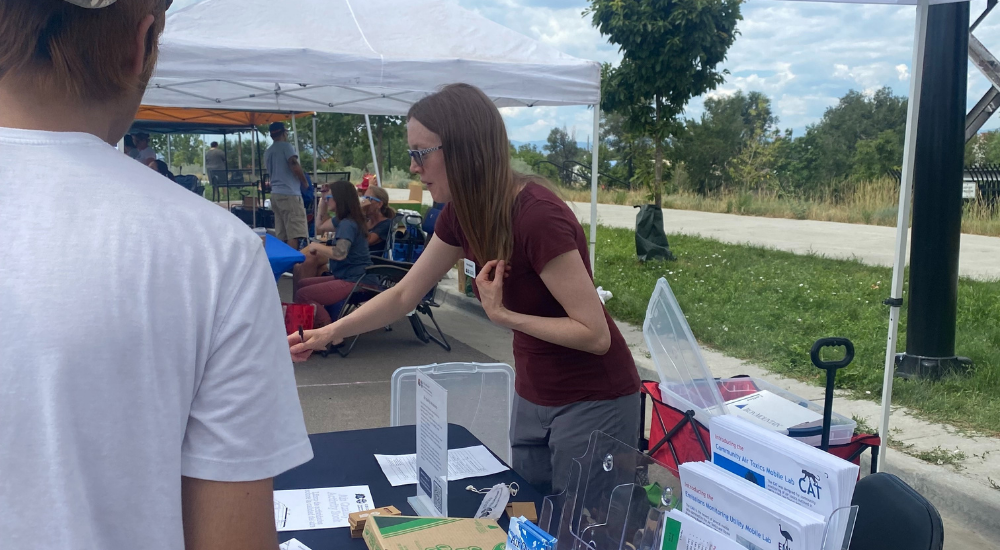
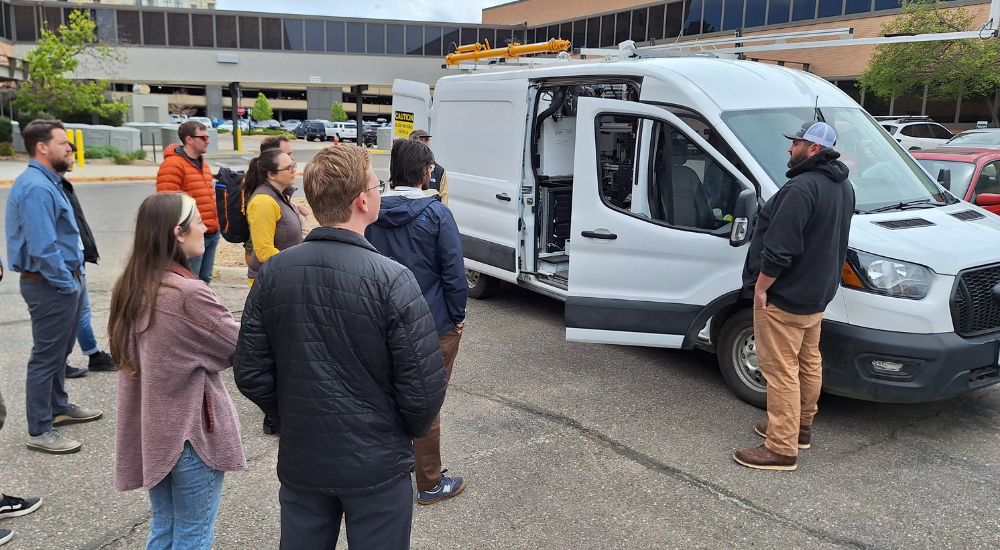
The air division’s Education Community Opportunities (ECO) Unit partners with communities to build awareness and understanding of air quality topics. We provide educational resources and hands-on opportunities through presentations, workshops, classroom programs, community events, and science fairs. Our team also supports local air monitoring efforts, helping communities access the tools they need to better understand air quality and protect their health.
Our programs support air quality awareness, science-based learning, and healthier communities.
To request materials or learn more, please fill out the Educational Materials request form
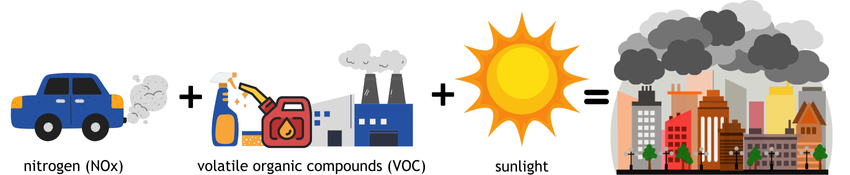
Ground-level ozone is formed when air pollutants known as “ozone precursors” react with each other in the presence of sunlight. Ozone precursors include nitrogen oxides (NOx) and volatile organic compounds (VOCs). In Colorado, ozone precursors come from sources like industry operations, vehicles, and equipment that run on oil and gas.
Short-term exposure can cause symptoms such as coughing, throat irritation, chest pains, breathing difficulty, and more frequent asthma attacks. Long-term exposure may increase the risk of heart or lung disease, and in some cases can increase the risk of premature death. Check out the division’s regulatory monitor map and real-time regulatory data on ozone.
Learn more about ozone pollution and your health
Air toxics
Air toxics are another concern we continue to learn more about through air monitoring. Air toxics can cause short-term and long-term health impacts. Short-term exposures can lead to eye irritation, wheezing and coughing, difficulty breathing, and nausea. Long-term exposures are associated with lung disease and cancer. Maternal exposure to air toxics can increase the risk of adverse birth outcomes, such as low birth weight and preterm birth. Research on how air toxics affect our health is ongoing.
You may find air toxics inside such as asbestos and lead paint and outdoors. They come in different forms, like gases, fumes from cleaning products, and tiny bits of metal.
Particulate matter (PM)
Particulate matter is a mixture of solid particles and liquid droplets found in the air. Some particles, referred to as PM10 (particles smaller than 10 micrometers (µm) in diameter), such as dust, pollen, and dirt, can be seen by the human eye. Other particles, called PM2.5 (particles smaller than 2.5 micrometers in diameter), can only be seen through microscopes. These tiny particles often come from wildfires, construction, and vehicle emissions.
Short-term exposure to particulate matter (over hours or days) can make lung diseases worse, trigger asthma attacks, and increase the risk of respiratory infections. Healthy children and adults usually don’t face serious effects from short-term exposure, but may feel temporary irritation when particle levels are high. For people with heart disease and other cardiovascular conditions, short-term exposure has been linked to more serious issues, like heart attacks.
Long-term exposure, such as living in areas with high particle levels for many years, can increase the risk of reduced lung function, chronic bronchitis, and, in some cases, can increase the risk of premature death.
Check out the division’s regulatory monitor map and real-time regulatory data on particulate matter.
Learn more about particulate matter and your health
Wildfire smoke
Wildfire smoke is a mix of gases and tiny particles from burning trees, plants, buildings, and other materials. In Colorado, wildfires are the largest source of smoke, though smoke also comes from wood-burning stoves, heaters, and prescribed fires. Prescribed fires help restore ecosystems by burning trees and plants in a controlled way.
The main health concern from smoke is particulate matter, but smoke emits other pollutants like carbon monoxide, ozone precursors, and air toxics.
- AirNow’s Fire and Smoke Map is a tool that provides information on fire locations, smoke plumes, and air quality from wildfires and other sources.
- Watch Duty, a nonprofit, is a tool to get alerts about nearby wildfires and firefighting efforts in real-time. You may use Watch Duty on your web browser or download their mobile app.
Air Quality Index (AQI)
The Air Quality Index (AQI) tells us if the air is clean or unhealthy. The lower the number, the cleaner the air.
When the number gets higher, we can take action to protect our health.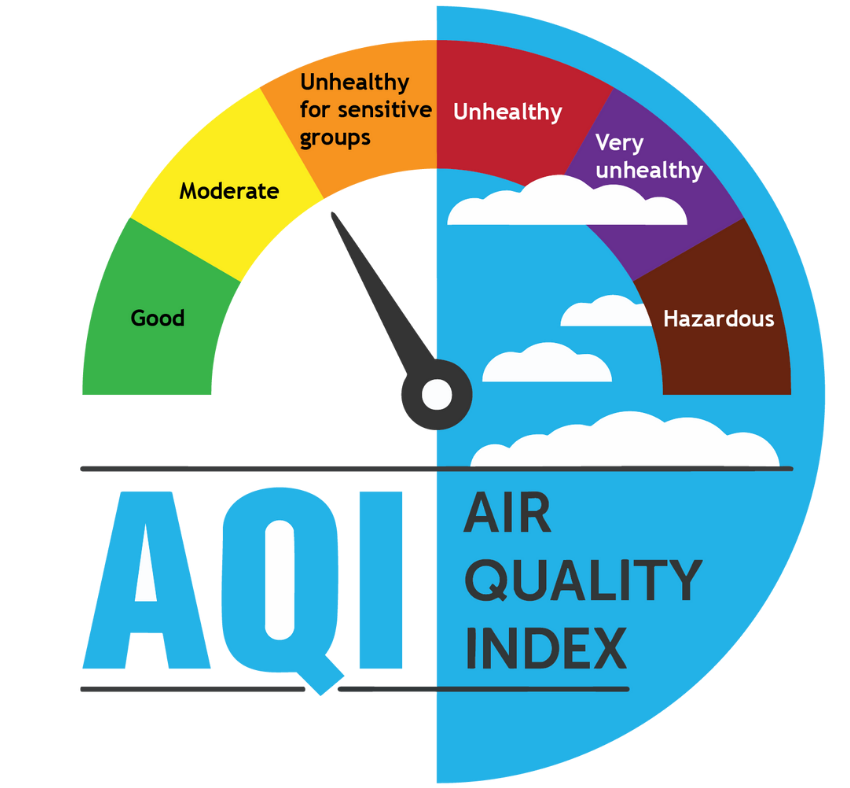
- Green is Good: 0 to 50.
- Yellow is Moderate: 51 to 100.
- Orange is Unhealthy for sensitive groups: 101 to 150.
- Red is Unhealthy: 151 to 200.
- Purple is Very Unhealthy: 201 to 300.
- Maroon is Hazardous: 301 and higher.
The real-time AQI shows current air quality conditions based on the most recent air monitoring data. It’s best for understanding what the air is like right now, especially when conditions change quickly, such as during wildfires.
The AQI forecast predicts what the air quality will be like later in the day or the next day, helping people plan ahead.
The AQI is a tool for communicating about outdoor air quality. This data comes from the air division’s air monitors, as well as locally run air sensors. You may also download the AirNow mobile app to get push notifications to your mobile phone.

Learning Library program
The Learning Library Program provides engaging, actionable resources to empower people of all ages to protect their health and address air quality challenges in their communities.
Digital Learning Library guidebook
The one-stop Digital Learning Library guidebook includes educational materials, activities, and insights on Colorado’s air quality, all in one place.
Frequently asked questions sheets
Printable flyers to answer common questions about air pollution, health, and steps to protect yourself. These resources provide actionable information to help you stay informed and prepared. Great for both children ages 12+ and adults.

Learning Library book list
A curated list of environmental science and public health books for young readers in English and Spanish, from early childhood to middle school. These books are designed to inspire curiosity and foster environmental literacy.
Submit an Educational Materials Request form to receive a list of books.
Air quality activity book
An engaging way for kids to learn about air quality through games, puzzles, and coloring available in English and Spanish. Print the activity book.
Air quality trivia questions
Air quality trivia questions are a fun way to engage participants at outreach events and other activities. The frequently asked question sheets can also help guide participants in answering these questions. This activity is designed for players of all ages, including preschool through adults.
“What’s in the air?” particle activity
Try the “What’s in the air?” particle activity using a paper plate and petroleum jelly to collect tiny particles from the air around you. After just a few days, you'll be able to see some of the particle pollution that’s usually invisible. This activity is designed for players aged 5+.
Supplies: Paper plate, piece of string, and petroleum jelly.
Colorado postcard activity
The Colorado postcard activity involves writing down the Air Quality Index (AQI) for an area in Colorado on a postcard or sharing your own ideas for protecting health and the environment. This activity is designed for players aged 5+.
Supplies: Printed postcards and colored pencils/markers.
“What I want my environment to be” poster
Participants contribute to a communal poster showing what they would like to see in the community around them. This activity is designed for players aged 4+.
Supplies: Poster paper and colored pencils/markers.
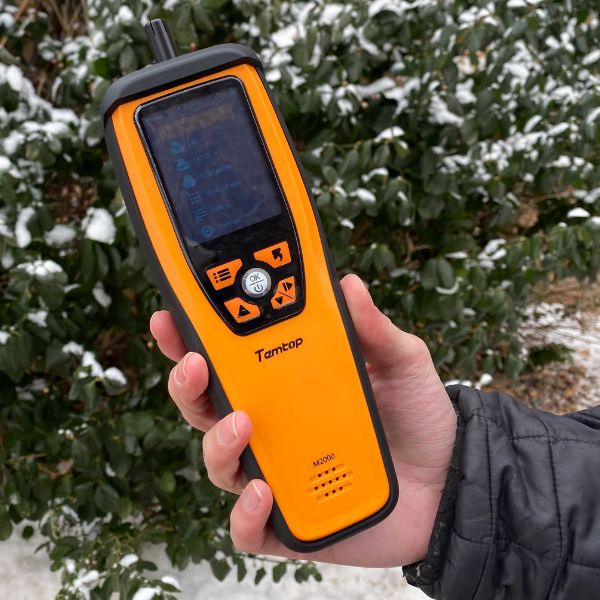
Use the handheld air sensor worksheet to explore air quality around you. You can predict which places will have the best and worst air quality. Take your sensor to at least three locations, record your measurements and observations, and share what you discovered.
Supplies: Handheld air sensor, printed worksheet, pencil, and clipboard (optional).
Participants use handheld air pollution sensors to find hidden air pollution. They map out the air quality in different areas, creating a map of “good” and “not-so-good” air quality. This activity is designed for players aged 10+.
Supplies: Handheld air quality sensor, Air Quality Index colored dot sticker, and a map of the space.
Participants use handheld air quality sensors or index cards covered in petroleum jelly to capture products of combustion, either through burning briquettes, potato chips, or other combustibles. Use with caution and adult supervision. This activity is designed for players aged 10+.
Supplies:
- Handheld air quality sensor
- Index card
- Petroleum jelly
- Magnifying glass
- Something flammable
- Stick lighter
- Lab goggles
- Small pie tin
- Ring stand
- Picture hanging wire
- D-clips
The particulate matter sensor activity uses handheld air sensors to explore different areas you frequently visit. Then you will generate ideas for improving the air quality in those areas. This activity is designed for players aged 10+.
Supplies: Handheld air quality sensor, safety vest, paper, colored pencils.
For the road vs. plants: comparing air quality activity, participants measure pollution near a roadway and then behind a vegetative barrier like bushes or trees to see if plants can improve local air quality. This is a great tie-in with anti-idling discussions! This activity is designed for players aged 12+.
Supplies: Handheld air sensors with instant readings, safety vests, paper, and colored pencils.
Anti-idling activities
What is anti-idling?
Anti-idling refers to reducing unnecessary vehicle idling. Idling happens when a vehicle’s engine is running but the vehicle is not in motion. Idling vehicles waste fuel and emit pollutants, including nitrogen oxides (NOx), particulate matter (PM), and greenhouse gases (GHGs).
Why is anti-idling important?
Vehicle idling contributes to poor air quality, which can lead to health problems. Children and older adults are more at risk to these pollutants. Reducing idling helps lower fuel consumption, lowers harmful emissions, and reduces GHG emissions that contribute to climate change.
Check out the EPA’s Idle-Free Schools Toolkit and the Regional Air Quality Council’s (RAQC) Engines Off Program for schools.
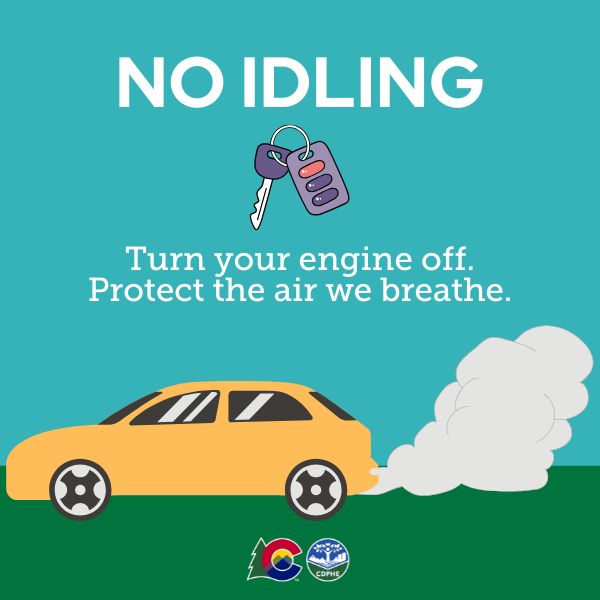
Implement an anti-idling program:
- Send flyers, emails, or letters explaining the health and environmental risks of idling.
- Encourage students or community members to create posters, signs or write letters to promote anti-idling habits.
- Work with leaders to set a rule limiting vehicle idling on the property.
- Place “No Idle Zone” signs in high-traffic areas like drop-off zones, parking lots, and bus stops.
- Host driver contact events where students or community members talk to drivers about the benefits of no idling.
- Run an anti-idling pledge contest in schools and reward the class with the most pledges.
- Promote walking, biking, or carpooling to reduce traffic.
- Encourage students or volunteers to measure air pollution near idling areas and share their findings.
Air quality flag program activities
The air quality flag program is a way for schools, organizations, and communities to visually communicate the daily forecasted Air Quality Index (AQI). Each day, a colored flag is raised to match the AQI, showing whether the air is good (green), moderate (yellow), unhealthy for sensitive groups (orange), unhealthy (red), or very unhealthy (purple).
Implementing a flag program is important because it helps protect public health. By checking the flag color, individuals can quickly see what the predicted AQI is and take precautions to protect their health, such as reducing outdoor activities on high-pollution days.
Check out the EPA’s Air Quality Flag Program
Implement an air quality flag program
- Read the EPA’s Flag Program Coordinator Handbook for more detailed steps.
- Choose a visible spot to display the flag each day (e.g., school flagpole, library, or near a community center entrance).
- Check the daily air quality forecasts to know which flags to raise.
- Use EPA letter, email, and press release templates to tell people about the program.
- Print daily air quality guidance posters, fact sheets, and other infographics.
- Involve staff, students, or volunteers to check the local AQI each day and raise the flag that corresponds to the daily AQI forecast color.
- Announce air quality updates in newsletters, social media, or morning announcements.
Educational resources for students
The division’s Education and Community Opportunities unit provides classroom lessons, projects, and activities. The materials are provided for teachers in English, but student-facing resources are available in Spanish. Teacher-specific resources, including a sortable spreadsheet with free, Next Generation Science Standard-aligned air quality-related teaching materials, are also available.
Fill out the Air Quality Curriculum Resources License form to receive these resources.
A one-week mini-unit during which students map light pollution and air pollution across space and time in Colorado to come up with a proposal for where to place a new ground-based telescope. *Note: Materials have not been translated into Spanish.*
Colorado Academic Standards covered: SC.5.3.5a
Next Generation Science Standards covered: 5-ESS3-1
A two-week middle school and upper elementary-aligned unit that uses a new friend’s asthma attack during soccer practice as an anchoring phenomenon to explore body systems and air pollution. Students learn about how wildfire smoke impacts the human body and come up with recommendations in case there are future wildfire events. The unit includes a final assessment.
Colorado Academic Standards covered: SC.MS.2.1c, SC.MS.2.6a, SC.5.3.3a, SC.5.2.2a and SS.5.2.1c, SS.6.1.2b, SS.6.2.1d
Next Generation Science Standards covered: MS-LS1-3, MS-LS2-3, 5-ESS2-1, 5-LS2-1
A three-week high school-aligned unit that introduces students to sources of air pollution, including wildfire smoke, vehicles, and stationary sources. Students then experiment with how air pollution moves through the atmosphere and ultimately consider how it affects their air quality. The unit requires students to design a solution to address air quality concerns in their communities.
Colorado Academic Standards covered: SC.HS.2.6.b, SC.HS.3.9.a, SC.HS.3.11.b, SC.HS.3.12.b
Next Generation Science Standards covered: HS-LS2-7, HS-ESS3-1, HS-ESS3-4, HS-ESS3-6
Air monitoring
Air monitoring is the process of using electronic devices to measure pollutants in the air we breathe. Depending on the type of device, monitors can detect a range of pollutants and provide real-time air quality data.
Air monitoring data is important for protecting public health and reducing pollution.
Monitoring air quality in communities can help
Inform actions
Understanding the levels of air pollutants in our air can help guide actions that people can take to protect their health.
Check compliance with permits
This helps identify facilities for inspection to ensure they are in compliance with or follow their permits and pollution rules.
Guide regulations
The data helps inform rules to limit pollution from sources like factories, vehicles, and oil and gas processes, leading to cleaner air and healthier communities.
Air monitoring programs in Colorado
Regulatory air monitoring
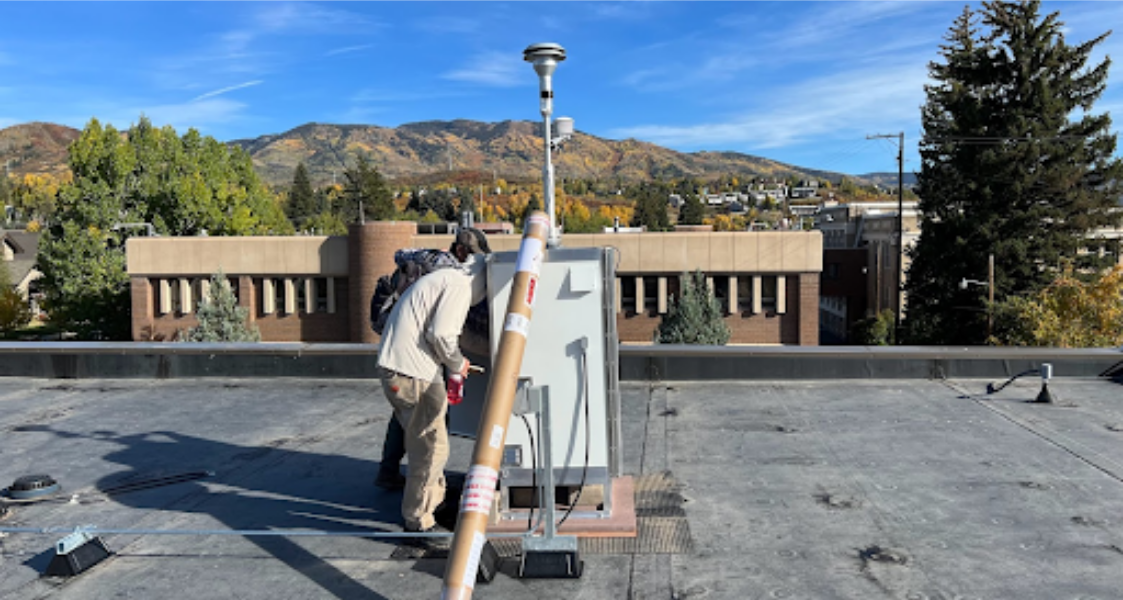
The air division operates and supports air monitoring efforts across Colorado to measure and report on air quality. The division focuses on pollutants with the greatest impact on public health in Colorado, including particulate matter, ground-level ozone, and air toxics. Other pollutants measured include sulfur dioxide and nitrogen dioxide. Data collected from these monitoring networks is publicly available. Particulate matter, visibility, and ozone data are used to issue alerts and advisories, helping individuals and communities take steps to protect their health.
Air sensor networks
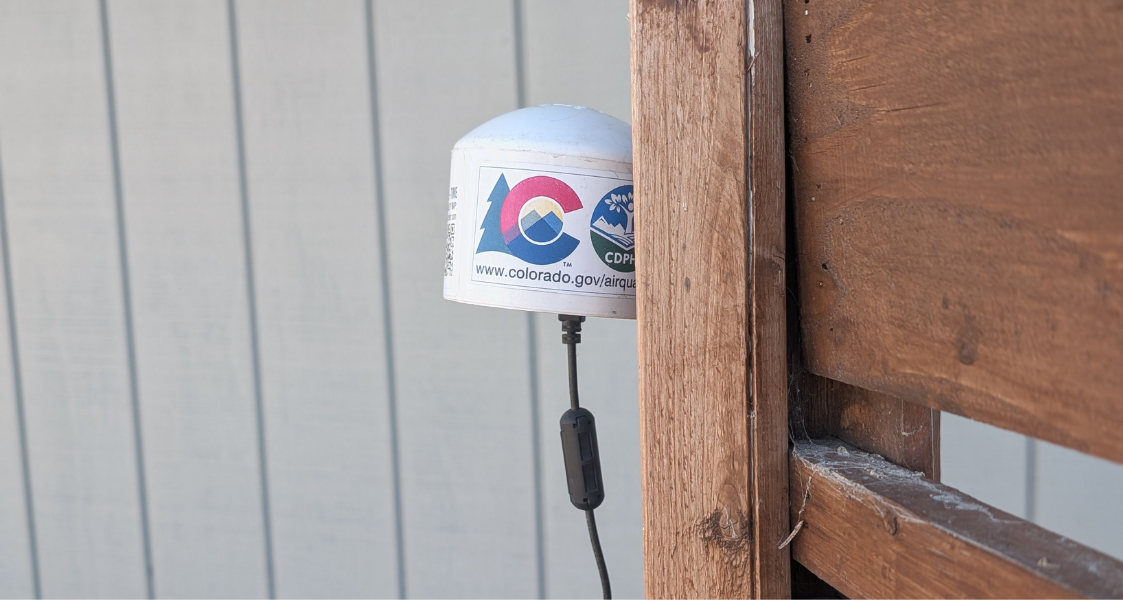
In addition to regulatory monitoring, the division supports local and community-based air monitoring efforts. Many local networks use air sensors, which are lower in cost, portable, and generally easier to operate than regulatory-grade monitors. While low-cost air sensors don’t meet the standards for policy decisions, they provide valuable insights into local pollution patterns, helping individuals take steps to protect their health.
Check out the air monitoring networks linked below to find air sensors near you!
Air Sensor Loan Program
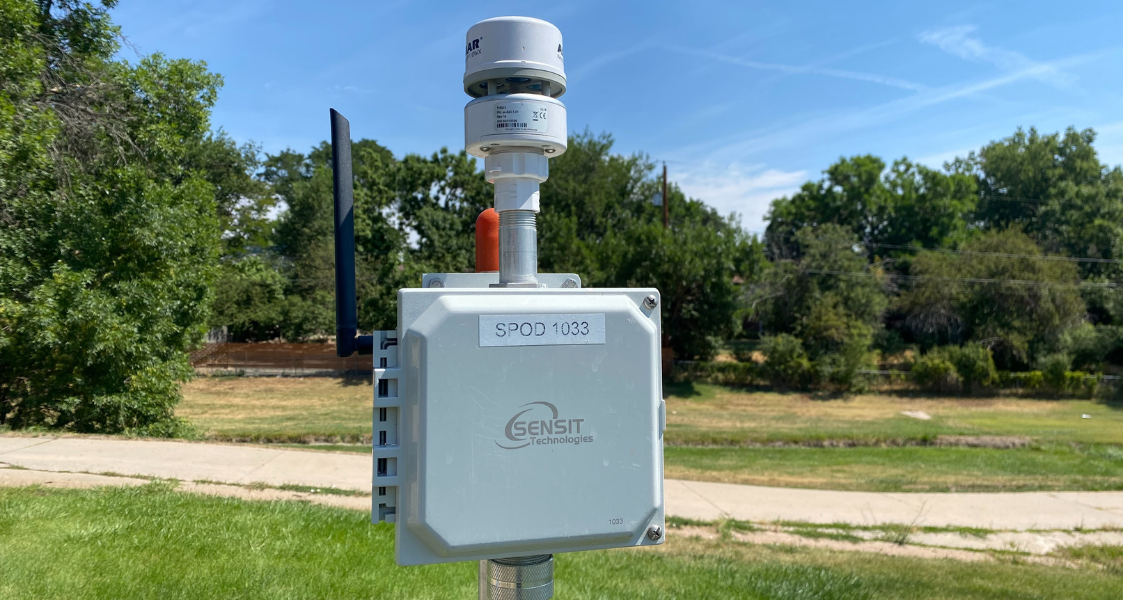
The Sensor Loan Program is a community-hosted air quality data and education program. Through the program, small air sensors are deployed to raise awareness about air quality topics and provide communities with hands-on experience in air monitoring.
The program is led by the air division in partnership with local organizations. Local organizations play a key role in expanding environmental education and empowering youth to engage with local air quality issues.
Public participation opportunities
- Stay informed about the division’s public participation opportunities.
- Check out the division’s Community engagement: Shaping air regulations and rulemakings.
- Learn about and submit public comments on individual air permits.
- CDPHE’s public participation opportunities on other topics like water quality, hazardous materials, and more!
Contact us
Questions? Email the Education and Community Opportunities Unit at cdphe_apcd_eco@state.co.us.
Stay informed. Subscribe to the air division’s mailing list and sign up for air quality alerts and advisories in your region to learn when particulate matter and ground-level ozone levels are high.