
Childhood vaccines

Vaccines protect infants and children by teaching their immune system to recognize germs that can make them very sick. Children’s immune systems take time to develop. This makes it harder for them to fight off serious illnesses. Vaccines are the best way to protect them from these diseases.
Many vaccine-preventable diseases are dangerous for infants, toddlers, and children. For example:
- Polio can cause lifelong paralysis.
- Whooping cough can cause a baby to stop breathing.
- Measles can cause serious complications that can lead to hospitalization and even death.
Childhood vaccines can help protect your child from up to 18 serious diseases. Talk to your health care provider about which vaccines your child may need today.
Find a vaccine provider near you
Colorado childhood vaccine recommendations
CDPHE recommends that families follow the Recommended Child and Adolescent Immunization Schedule issued by the American Academy of Pediatrics (AAP). The AAP schedule is based on decades of scientific research. Experts from 12 major medical groups — representing more than a million health care providers across the U.S. — agree that this schedule is the safest way to protect the communities in which our children learn and play.
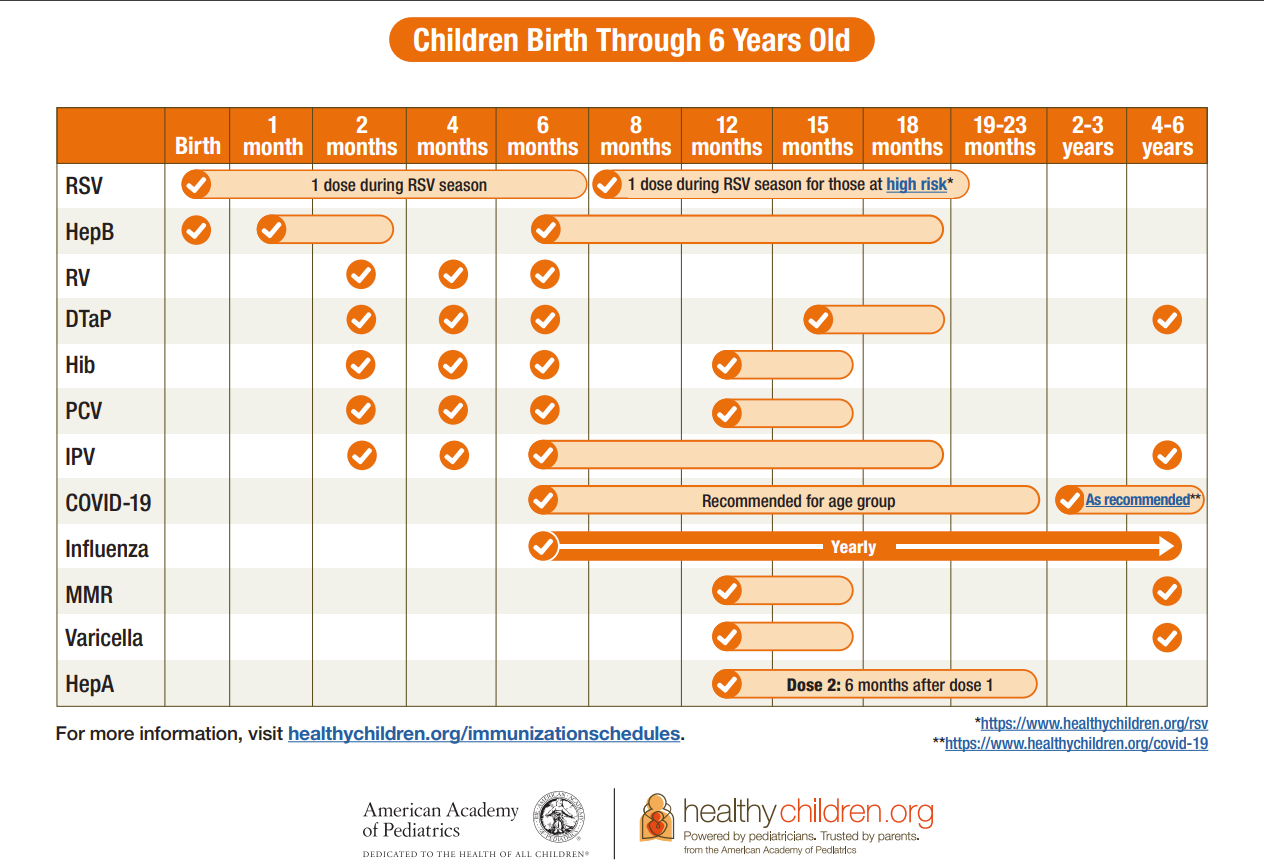
RSV is a common respiratory virus that usually causes mild, cold-like symptoms, but the infection can be serious for infants. RSV spreads easily from a sneeze or cough that gets into the eyes, nose, or mouth, or by touching objects or surfaces with the virus on it and then touching your eyes, nose, or mouth. RSV is the most common cause of hospitalization among infants in the U.S. Immunizations can protect babies from getting very sick from RSV.
Hepatitis B is an extremely contagious virus that attacks the liver. There is no cure for hepatitis B. Many people (nearly two out of three) living with hepatitis B are unaware of their infection and can transmit the virus through casual contact, such as sharing a razor, nail clippers, or a toothbrush. Most babies with hepatitis B are infected at birth. Nine in 10 newborns who become infected with the hepatitis B virus develop lifelong hepatitis B. This can eventually lead to serious health problems, including liver damage (cirrhosis), liver cancer, and even death. Vaccination for hepatitis B is cancer prevention.
Pertussis, or whooping cough, is one of the most common vaccine-preventable diseases in the U.S. Babies are at highest risk if they get whooping cough, which is why it’s important to vaccinate. Almost all whooping cough deaths in the U.S. are among babies younger than 3 months old. Whooping cough is very contagious. It spreads easily when people cough or sneeze around others. The cough from whooping cough can last for more than 10 weeks, and makes it hard to breathe, eat, drink, and sleep.
COVID-19, a disease caused by the SARS-CoV-2 virus, spreads mainly by respiratory droplets when people with the illness breathe, cough, sneeze, or talk. Most people with COVID-19 have mild symptoms, but some people become severely ill. Some people can experience long-term effects from their infection, known as Long COVID. Vaccination continues to be recommended as the best way to protect from serious illness from COVID-19 and from Long COVID.
Commonly known as the flu, influenza is a respiratory virus that infects the airways of the lungs. Flu virus spreads through coughing, sneezing, and touching contaminated surfaces. Flu can make you feel miserable. Symptoms like fever, cough, shaking chills, body aches, and weakness are common. Sometimes, flu can be severe and cause infection in the lungs (pneumonia), which can make it difficult to breathe. The flu vaccine can reduce your risk of flu and its potentially serious outcomes that can lead to emergency department visits, hospitalizations, and, in rare cases, death. Influenza viruses often change each year, so getting an updated vaccine ensures you have the most up-to-date protection for the current flu season. There is strong evidence that when the flu vaccine does not prevent flu, your illness is likely to be much milder than if you had not received the flu vaccine.
Measles is a highly contagious respiratory virus. People can get measles just by being in a room where a person with measles has been, even up to two hours after that person has left the room. Measles can be serious, especially in children younger than 5 years. One in five people in the U.S. who get measles will be hospitalized. It can lead to brain swelling and even death. Two doses of the measles, mumps, and rubella (MMR) vaccine provide approximately 97% protection against measles infection.
Rotavirus is a virus that can cause severe diarrhea, leading to dehydration and hospitalization. Before the rotavirus vaccine, rotavirus disease was a common and serious health problem for children. Each year, among U.S. children younger than 5 years, rotavirus led to more than 400,000 doctor visits and more than 55,000 hospitalizations. The rotavirus vaccine is highly effective. Each year, the vaccine prevents an estimated 40,000 to 50,000 hospitalizations among infants and young children.
Haemophilus influenzae type b, also known as Hib, is a bacteria that is spread from person to person through the air. Hib mostly impacts children under the age of 5 years. Hib can infect the lining of the brain and cause meningitis, which can lead to permanent deafness and brain damage. Hib infection can also cause sepsis, severe swelling of the throat, and pneumonia. Most children with Hib need care in the hospital. Since the introduction of the Hib vaccine in 1985, the incidence of Hib disease has decreased by more than 99%.
Caused by the pneumococcus bacteria, pneumococcal disease can include many different types of infections. Most pneumococcal infections are mild, but some can be deadly or result in long-term problems. Pneumococcal bacteria typically affect the most vulnerable, including infants and toddlers. Since the introduction of the pneumococcal conjugate vaccines (PCV), severe disease has declined by 95% for children under 5 years. Preventing the disease is easy if you get vaccinated.
Poliovirus is a highly contagious virus that causes polio, a disease that mainly affects the nerves in the spinal cord or brain stem. Polio can cause partial or lifelong paralysis and even death. Polio infection is more common in infants and young children. The polio vaccine provides the best protection against polio.
Chickenpox is a virus spread by sneezing, coughing, and physical contact with broken blisters. While chickenpox is a respiratory virus, visible symptoms often include a rash that turns into itchy, fluid-filled blisters. Chickenpox is very contagious. Chickenpox can cause complications that can lead to hospitalization, especially in infants. Since the introduction of the varicella vaccine in the U.S., the number of people infected with chickenpox has decreased by 99%.
Hepatitis A is a virus that causes hepatitis, or inflammation of the liver. Hepatitis A is highly contagious. Not everyone with hepatitis A has symptoms, but they can still spread the virus. There are no medications to treat hepatitis A. The hepatitis A vaccine has been around for decades and is recommended for all children and adolescents.
Our stance on vaccines
Colorado remains committed to protecting the health of our residents by following scientific evidence and public health best practices. Regardless of developments at the federal level, our vaccine recommendations and disease-prevention strategies are grounded in data, transparency, and expert guidance to ensure Coloradans continue to have access to safe and effective prevention tools.