
Health Equity Strategic Plan | Department of Transportation

Visit the Department of Transportation website or contact CDOT for more information or assistance with direct services.
Priority:
To provide the best multi-modal transportation system for Colorado that most effectively and safely moves people, goods, and information
Health Care Access and Quality, Neighborhood and Built Environment, Social and Community Context, Economic Stability, & Education Access and Quality
Problem statement
To promote and ensure access to livability, which is how transportation helps achieve broader community goals like increasing travel options, reliable access to jobs, enhancing unique community characteristics, affordable housing, and school choice, while helping create safe streets and expanded business access to markets.
Community engagement
- Build personal relationships with disproportionately impacted communities among our various stakeholder groups
- Develop alternative methods for engagement
- Collaborate with diverse organizations and community-based organizations (CBOs)
- Establish trust within disproportionately impacted communities

Communities prioritized by this strategy:
- Low-income communities
- Communities of color
- LGBT+ communities
- People living with disabilities
- Housing cost-burdened communities
- Linguistically isolated communities
- Historically marginalized communities
- Cumulatively impacted communities
- Rural communities
- Tribal lands
- Mobile Home Communities
- Agency staff
Areas of impact
This strategy will impact Coloradans statewide.
2024 milestones
- Achieve a 4% reduction in traffic fatalities from 2023. [Complete]
- Execute 16 high-visibility enforcement (HVE) campaigns, resulting in 6,986 DUI arrests. [Complete]
- Deliver 49 outreach events targeting impaired driving and speeding. [Complete]
- Generate 82M paid media impressions for impaired driving and vulnerable road user campaigns. [Complete]
- Award $29M for MASH-compliant guardrail upgrades in key locations. [Complete]
- Increase speed feedback devices on strategic corridors to 89. [Complete]
2025 milestones
- Publish 2025 Strategic Highway Safety Plan.
- Launch the Colorado Speed Enforcement Program.
- Deliver $6.9M in targeted safety enhancements to protect vulnerable road users.
- Generate 364M paid media impressions for traffic safety campaigns.
- Advance key legislation for hands-free driving, child passenger safety, and commercial vehicle reforms.
- Partner with 97 local agencies for the High-Visibility Enforcement (HVE) Program, delivering over 24,000 enforcement hours.
2026 milestones
- Increase local law enforcement hours addressing impaired driving on roadways having a high propensity for impaired driving-related crashes and fatalities to 26,908 hours.
- Achieve 200 automated speed enforcement days on state, US, or interstate highway work zones.
- Provide $13 million in funding for the construction of safety projects in areas with a history of or at high-risk for vulnerable road user crashes.
- Launch a public relations and earned media campaign for 15 high-visibility DUI enforcement periods.
- Continue implementation of the 2025 Strategic Highway Safety Plan.
By December 2026:
- In an effort to protect the traveling public, CDOT and Colorado State Patrol will reduce the number of traffic-related fatalities and serious injuries in fiscal year 2026 by 13.5%, compared to the same month in fiscal year 2023.

Communities prioritized by this strategy:
- Low-income communities
- Communities of color
- LGBT+ communities
- People living with disabilities
- Housing cost-burdened communities
- Linguistically isolated communities
- Historically marginalized communities
- Cumulatively impacted communities
- Rural communities
- Tribal lands
- Mobile Home Communities
Areas of impact
This strategy will impact Coloradans statewide.
2024 milestones
- Decrease carbon dioxide equivalent (CO2e) emission to 3.99 tons per capita in fiscal year 2024. [Complete]
- Increase 30-mile DC fast-charging access on state highways. [Complete]
- Increase the number of Colorado Scenic and Historic Byways classified as electrified byways. [Complete]
- Increase the number of operational zero emission transit buses. [Complete]
- Provide $30.9M in grant funds for active transportation, multimodal, and Transportation Demand Management. [Complete]
2025 milestones
- Decrease carbon dioxide equivalent (CO2e) emission to 3.90 tons per capita in fiscal year 2025.
- Increase 30-mile DC fast-charging access on state highways.
- Increase the number of Colorado Scenic and Historic Byways classified as electrified byways.
- Increase the number of operational zero emission transit buses.
- Provide $52.9M in grant funds for active transportation, multimodal, and Transportation Demand Management.
- Provide more than $48 million to add 580 new fast-charging ports through the National Electric Vehicle Infrastructure program.
- Provide $31.7 Million in New Funding for zero emission vehicle Transit Projects.
2026 milestones
- Increase 30-mile DC fast-charging access on state highways.
- Increase the number of Colorado Scenic and Historic Byways classified as electrified byways.
- Increase the number of operational zero emission transit buses.
- Decrease transportation sector emissions of carbon dioxide equivalent, nitrogen oxide, and volatile organic compounds.
By December 2026
- Increase the percentage of total state highway miles within a 30-mile travel buffer of direct current fast-charging stations from 83% to 85%.
- Increase the number of Colorado Scenic and Historic Byways classified as electrified byways from 18 to 21.
- Increase the number of operational zero-emission transit buses from 79 to 90.
- Decrease transportation sector emissions of:
- Carbon dioxide equivalent from 3.90 tons per capita in fiscal year 2025 to 3.78 by June 30, 2026.
- Nitrogen oxide from 5.36 pounds per capita in fiscal year 2025 to 4.93 by June 30, 2026.
- Volatile organic compounds from 1.90 pounds per capita in fiscal year 2025 to 1.50 by June 30, 2026.
Communities prioritized by this strategy:
- Low-income communities
- Communities of color
- LGBT+ communities
- People living with disabilities
- Housing cost-burdened communities
- Linguistically isolated communities
- Historically marginalized communities
- Cumulatively impacted communities
- Rural communities
- Tribal lands
- Mobile Home Communities
Areas of impact
This strategy will impact Coloradans statewide.
2024 milestones
- Increase Bustang revenue service miles to 2,201,512. [Complete]
- Increase Bustang ridership to 246,871. [Complete]
- Complete the SB 22-180 Bustang service expansion. [Complete]
- Increased operational mobility hubs on Bustang corridors to 3. [Complete]
2025 milestones
- Ensure reliable and consistent service for Bustang passengers by maintaining the percentage of scheduled bus trips that are completed as planned.
- Increase ridership for the Bustang Family of Services.
- Complete the Transit Connection Study.
2026 milestones
- Ensure reliable and consistent service for Bustang passengers by maintaining the percentage of scheduled bus trips that are completed as planned.
- Develop a sustainable funding plan for delivering all statewide Bustang services.
- Outline an implementation plan for the Transit Connection Study results across all Bustang services.
- Increase ridership for the Bustang Family of Services.
By December 2026
- Increase ridership for the Bustang Family of Services from 353,575 in fiscal year 2025 to 371,251 (5% increase) by June 30, 2026.
Communities prioritized by this strategy:
- Low-income communities
- Communities of color
- LGBT+ communities
- People living with disabilities
- Housing cost-burdened communities
- Linguistically isolated communities
- Historically marginalized communities
- Cumulatively impacted communities
- Rural communities
- Tribal lands
- Mobile Home Communities
Areas of impact
This strategy will impact Coloradans statewide.
2024 milestones
- Publish The Preliminary Purpose and Need Statement to the Legislature of the State of Colorado. [Complete]
- Identify new corridors for future or expanded passenger rail service as part of the Mountain Corridor Vision. [Complete]
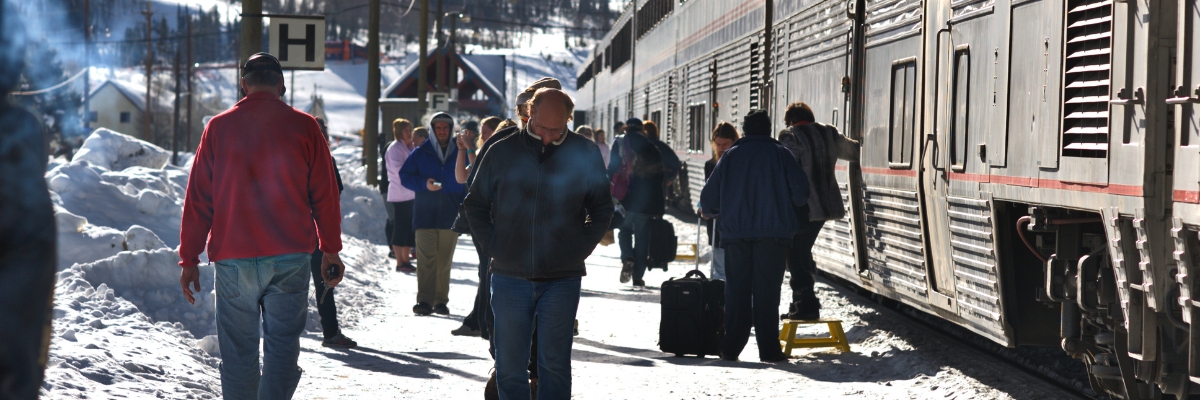
- Hold a "Mountain Rail Coalition Kick Off" event in Winter Park in June 2024. [Complete]
- Expand the Winter Park Express service and season. [Complete]
2025 milestones
- Finalize a staffing plan for Colorado Mountain Rail.
- Identify station locations for all new Colorado Mountain Rail stations and initiate station area planning.
- Increase Winter Park Express ridership to 43,919.
- Sign a 25-year lease agreement with Union Pacific for the Moffat Tunnel, securing passenger rail access.
2026 milestones
- Begin construction of all infrastructure upgrades, including necessary terminal and storage facilities, for daily Colorado Mountain Rail service from Denver to Granby (Phase 1a).
- Secure rolling stock for daily Colorado Mountain Rail service from Denver to Granby.
- Secure an operator for daily Colorado Mountain Rail service from Denver to Granby.
- Build ridership demand for Colorado Mountain Rail, and expand Winter Park Express service and season through SB24-184 funding.
By December 2025
- Finalize a staffing plan for Colorado Mountain Rail.
- Identify station locations for all new Colorado Mountain Rail stations and initiate station area planning.
By December 2026
- Implement daily Colorado Mountain Rail service from Denver to Granby.
- Begin construction of all infrastructure upgrades, including necessary terminal and storage facilities, for daily Colorado Mountain Rail service from Denver to Granby (Phase 1a).
- Secure rolling stock for daily Colorado Mountain Rail service from Denver to Granby.
- Secure an operator for daily Colorado Mountain Rail service from Denver to Granby.
- Increase Winter Park Express ridership from 43,919 in fiscal year 2025 to 46,115.